

Gravel calculator
Calculate this loadSize a driveway, path, or French drain in cubic yards first — then convert to tons using a cited 1.4 tons/yd³ planning density.
Project calculator
Area 1
Cubic yards
1.23 yd³
Tons
1.73 t
2 cu ft bags
17
Estimated cost
Add a price
Active area
Leave blank to skip cost
Gravel planning density 1.4 t/yd³ (FHWA / typical crushed gravel 2,400–3,000 lb per loose cubic yard). Order 1.5 yd³ with 5% waste. 3 cu ft bags: 12.
Most American landscape yards still quote gravel by the cubic yard and bill by the ton. That split is why a gravel calculator has to show both. A loose cubic yard of 3/4-inch crushed gravel typically weighs about 2,800 pounds — 1.4 tons — according to FHWA-range aggregate unit weights. Wet stone, crusher fines, and recycled concrete can swing that number by 10–20%, so treat the tonnage as a planning figure and let the scale ticket settle the invoice.
Depth is the measurement people underestimate. A walking path can live at 2 inches over landscape fabric. A driveway that will see trucks wants 4 inches of compacted base, often placed in two lifts, on top of compacted subgrade. If you only measure the finished surface and forget compaction, you will short the order. Add 10% when the yard is placing and compacting, or when the edges are ragged.
Shape matters less than people think once you break the job into rectangles, circles, and L-shaped pads. A circular fire-pit apron is πr² times depth. An L-shaped parking spur is two outer-leg rectangles minus the shared corner so you do not double-count the junction. BulkYardCalc does that arithmetic above, in feet and inches first, because that is how US tape measures are marked.
Bags exist for patching potholes and filling a single planter. There are 27 cubic feet in a yard, so a yard is 13.5 of the common 2 cu ft bags or 9 of the 3 cu ft bags. At $5–7 a bag, that is $60–90 a yard before tax — usually more than a bulk dump. Use the bag output to decide when to switch, not as the default.
If you already have a contractor takeoff in square feet, switch to known area and enter depth. The same 27-cubic-foot rule applies. Share the project link with a partner or paste it into a yard quote request. Nothing in the share URL is a name, phone, or address.
Formula
Cubic yards = length (ft) × width (ft) × depth (ft) ÷ 27. Tons ≈ yards × 1.4.
Worked example
A 20 × 10 ft driveway at 4 inches is 20 × 10 × 0.333 ÷ 27 = 2.47 yd³, about 3.46 tons of crushed gravel.
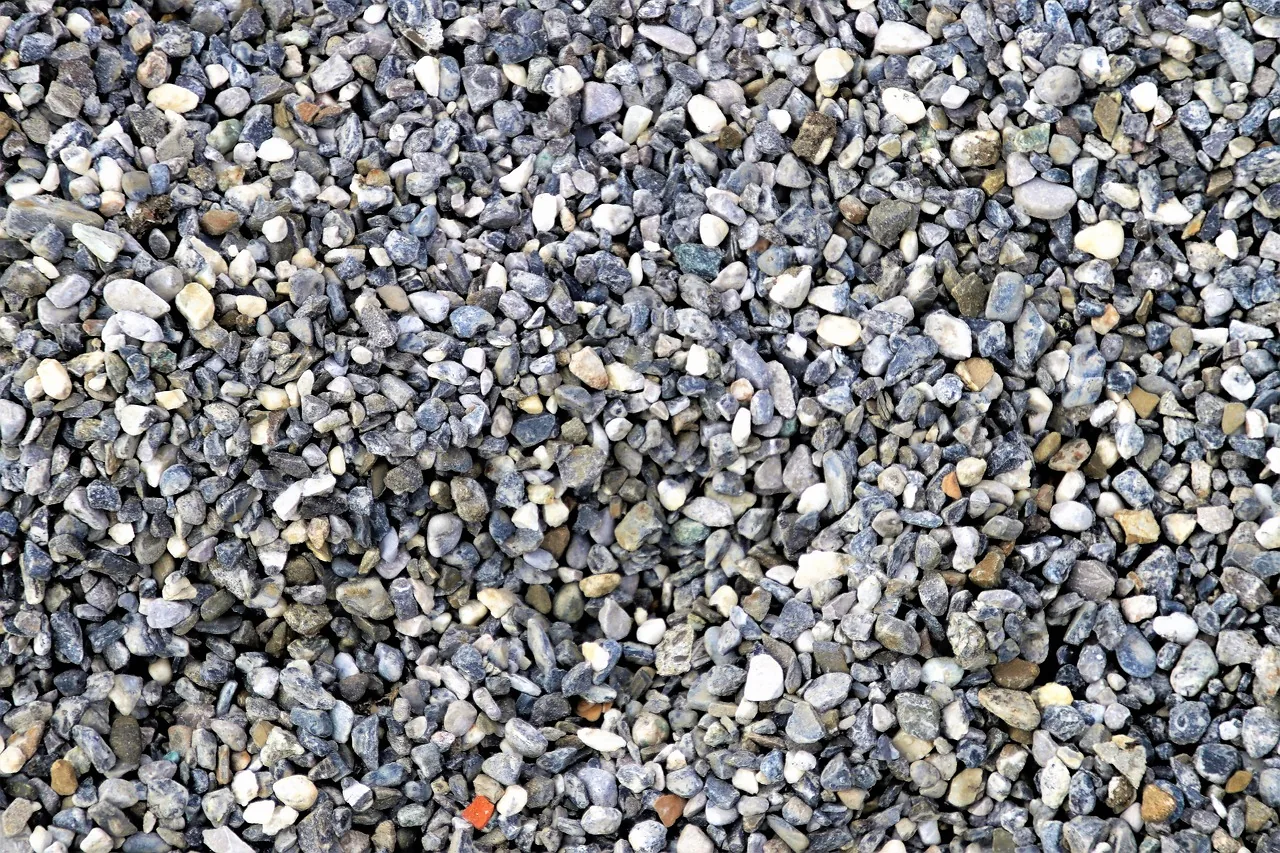
Gravel on the ground
Typical cover is 3 inches. Range 1.2–1.5 t/yd³. 3/4-inch crushed gravel as placed, not compacted. Wet loads run heavier.
Density table
| Material | t / yd³ | lb / yd³ | Source |
|---|---|---|---|
| Gravel | 1.4 | 2800 | FHWA / typical crushed gravel 2,400–3,000 lb per loose cubic yard |
| Crushed stone | 1.35 | 2700 | ASTM C29 typical bulk density for crushed stone aggregates |
| Pea gravel | 1.3 | 2600 | Landscape industry pea-gravel bulk density, 2,400–2,800 lb/yd³ |
| Sand | 1.35 | 2700 | FHWA / Engineering Toolbox dry-to-damp sand ~2,400–3,000 lb/yd³ |
Related calculators
Crushed stone calculator
Crushed stone is the angular base under driveways and pavers. Plan 4 inches, compacted, at about 1.35 tons per yard.
Pea gravel calculator
Rounded 1/4–3/8 inch pea gravel is a 2-inch path material. It migrates, so plan edging and a little extra.
How much gravel do I need?
A driveway usually wants 4 inches of compacted gravel. Paths can use 2–3. Measure, then convert to yards and tons.